My Photo

Probes Pack

  • D4sp_006
    Images from disposable cameras given to project participants (academics, designers, entrepreneurs/managers) asked to take photos of things like: - a favourite product - a favourite service - a service that is very nationally or ethnically specific - a service based on a 19th century technology - a service in which the participant hates being the user and some other things (Currently unsorted)

Project pairing photos + artefacts

  • Artefact from IDEO project with Prosonix
    A small selection of photos and artefacts from the project pairings during this research between each service design consultancy and each science/technology enterprise

Research

  • Probenapkin3
    Examples of research methods used in this interdisciplinary project including design research methods such as cultural probes packs sent to participants

Workshop 1 - December 18/19, 2006

  • D4s_event1_cogcollageswall
    Images from interdisciplinary workshop held at Said Business School on December 18/19, 2006
Blog powered by TypePad

Dec 11, 2008

Project completed

For those interested in knowing more about this research, please visit the archive at http://www.sbs.ox.ac.uk/D4S/ which includes a publication about the project (downloadable PDF), a short film about an encounter between a service design consultancy live|work and personalized medicine company g-Nostics, posts from this research blog, and images from the project.


This website will no longer be updated or maintained.

December 2008

Oct 22, 2007

Designing for Services - what next

The engagements between the service design consultancies and science/technology enterprises were finished by early July; the project's five workshops are now over; ; and the lead investigators (Lucy Kimbell and Victor Seidel) have spent the summer reviewing some of the data - video, notes from observations, photographs, artefacts created during the project and interviews. This is a rich and diverse data set, which we will make available in part via a web archive which is scheduled to go live by the end of 2007. In addition, initial reflections - academic perspectives some of which are outlined above - will be published in a small publication also available by the end of this year. The participating science and technology enterprises will receive a report written by Said Business School academics involved in the project. The design consultancies have had their (relatively small) invoices paid. Transcripts of the video recording meetings and workshops on the pair projects will be prepared.

Project participants have been invited to work with us next year to explore in more depth some of the data. The formal part of the project funded by the Designing for the 21st Century initiative will soon be over - but it felt at the final workshop that the project is just starting - a multidisciplinary and interdisciplinary conversation that may take another couple of years - at least - until we know more about what we have learned. We look forward to making some of that public via this blog and welcome readers' feedback.

Oct 10, 2007

Final workshop - 5 October 2007

D4s_event5_scribegrab2_3
D4s_event5_scribegrab1


For our final project workshop, the core participants of around 25 people were joined by some guests from service design practice, including Plot, Engine Group, and Orange, and academia, including Tom Inns (Dundee University, and director of the Designing for the 21st Century research initiative), Daniela Sangiorgi (Lancaster University) and Stefan Holmlid (Linköpings Universitet).

The aim of the workshop was to hear from the academic participants - many from social sciences/management studies and some from design studies - their reflections on the project. The short presentations presented a number of sometimes complementary, sometimes contradictory, perspectives on the 'data' that emerged in the project - what happened in the engagements between the service design consultancies and their science enterprise pairs, and the accounts given by people from these organizations in the previous workshops; and the wider context in which 'service design' and 'the designing of services' are emerging as bodies of knowledge and subjects of research.

In discussion it became clear that the project had achieved its aims - to bring together a diverse group of academics, practitioners in service design, and entrpreneurs in science and technology enterprises offering services - to explore the different kinds of understanding they have about service design in science and technology-based enterprises. Participants also raised questions about the relevance of this kind of exploratory research for practitioners - since service design is arguably being led at present by service design practitioners.

The speakers included
- Antti Ainamo, reflecting on research in services marketing and technology services
- Kate Blackmon, comparing the cognitive maps, mental models and language in service design and operations management
- Lucy Kimbell, giving an overview of the Designing for Services project as a whole and showing a rough cut of a short film which will be one of the public outputs of the project distributed in a web archive
- Victor Seidel, discussing the modularity evident in the services offered by technology enterprises participating in the project
- Bruce Tether, drawing on UK Design Council data to make clear the extent of 'silent design' in service design and innovation
- Marc Ventresca, raising questions about the role of language in creating markets and institutions
- Chris Voss and Leonieke Zomerdijk, talking about their recent research into the design of experiences
- Jennifer Whyte, discussing the role of visualization and boundary objects in the interactions between designers and design clients
- Bob Young, reflecting on the relationship between design theory and service design theory and practice

As with the other workshops, we had the services of a scribe (graphic facilitator) documenting the event. The scribed output by Josh Knowles is available for download here (PDF, 455kB). Christian Toennesen helped out during the event and took photos (coming soon). And a team from the Oxford Academy of Documentary Film recorded the event on video, some of which will be available on the web archive.

Jul 18, 2007

Vocabularies across disciplinary boundaries

D4s_event4_scribegrab

One of the planned outputs of this project studying service design is a 'vocabulary' (or glossary, or primer). Unlike many existing glossaries which serve to communicate key concepts in a field of knowledge, this one aims to draw from all the bodies of knowledge involved in this project - from design as well as social sciences. An example of a term we plan to have in our glossary is 'boundary object' (Star and Griesemer, 1989) (generally used by academics) complementing terms such as 'experience prototype' or 'service blueprint' (generally used by practitioners).

Download here the document containing the scribing from the 4th workshop held a couple of weeks ago (PDF, 1.8 MB) which captured in graphics and text some of the discussion of vocabulary during the event.


Jul 03, 2007

Workshop 4 - 2 July 2007

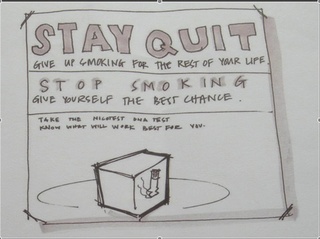
Liveworksketch_2

In this fourth workshop, the pairs of service design enterprises and science and technology enterprises who have worked together since January gave their final presentations to the wider project group of management researchers, design researchers, design practitioners and entrepreneurs. A very brief summary is given below.

All the design consultancies were asked to do six days' work with their paired enterprise, focussing on service design within the enterprise, deciding together how to make use of the time. The consultancies all commented that the structure of the project forced them to work differently than they ordinarily would with clients - less time to understand the client, little opportunity for iterating ideas, and having to select very few ideas to develop. Nonetheless it was striking how quickly they were able to get to grips with understanding an enterprise and its science and technology - and all three enterprises said they found the work done for them of value.

Radarstation (design company) and Oxford Gene Technology (science enterprise - mico-arrays for research)
Radarstation interviewed three of OGT's customers/ex-customers and analysed the service process they experienced. From this and their visit to OGT, they generated insights which they then used to suggest improvements to the service 'touchpoints' through which customers experienced OGT's service. Questions raised about this encounter included: to what extent a 'design-led' approach differed from that of an operations or marketing consultancy, rooted in management thinking?

IDEO (design company) and Prosonix (science enterprise - particle engineering)
One of the IDEO designers joined a customer visit and shadowed the encounter between Prosonix's sales manager and a potential client. This, and their own visit to Prosonix, lead to IDEO developing insights into Prosonix's service. Following opportunity mapping, IDEO and Prosonix developed a suite of eight ideas which could form a tool kit for Prosonix within their sales and service process. IDEO developed two of these into prototypes - one involving fake adverts suggesting future uses of Prosonix's technology ('adcepts') and the other a prototype dossier, a tool for the sales manager. Questions included one about the role of simple visual metaphors in IDEO's projects, including this one - it was striking how both IDEO designers and the Prosonix sales manager repeatedly made use of a metaphor developed in one of their workshops, to make sense of and communicate what they were doing.

livework (design company) and G-nostics (science enterprise - personalized medicine)
Visits by livework designers to G-nostics and to a pharmacy offering their Nico-Test service, was followed by opportunity mapping based on a review of the existing service - physical and digital. The designers then created their own flow diagram focussed on the customer experience of using Nico-Test. Livework then sketched ideas which improved existing artefacts or suggested new ones (see the photo).

A fourth pair project will take place over the summer.

Academic feedback on these presentations included questions and comments such as
- the way all three projects seemed rooted in 19th-century models of 'product' and 'service' assuming binomial relations between service provider and service consumer, ignoring the networks within which such relations are instantiated
- the extent to which all three design companies offered a similar approach - a fluid process, a focus on customer experiences, journeys and touchpoints, and the role of prototyping
- how design-led innovation relates to ideas of disruptive innovation.

Each of these encounters has been documented with video and the Oxford research team will now draw on the video, interviews with the participants, and the artefacts created during the design process, to assemble publishable outputs which will examine how participants understand 'service design' and how, or if, this changed during the project.

The workshop ended with a special dinner, to which we also invited full-time and executive MBA students from Said Business School, as well as a wider group of service design professionals and managers. Three guest speakers offered provocative and stimulating perspectives on service design and innovation - Jim Spohrer, who leads IBM's development of Services Science and heads the company's Alamaden Research Centre; Ije Nwokorie who leads the service design practice at branding consultancy Wolff Olins; and Chris Voss from London Business School. In their talks, the speakers reminded us how little is understood about service innovation - increasingly evident as a knowledge gap especially in developed economies in which services dominate. Chris Voss drew on his recent research report written with Leonieke Zomerdijk into experience-based services which found 'silent design' within service innovation.

Apr 24, 2007

Workshop 3 - 20 April 2007

D4s_event3_ideopres_mini
Once again around 30 people gathered at the Said Business School for the third workshop in this academic-practitioner research project exploring the designing of services in science and technology-based enterprises. This time, each project pair (one design consultancy + one enterprise) presented individually what they had done, to date, in their engagement with each other. This was followed by questions and feedback from the wider group including academics from both design and management studies.

What was striking was how representatives from two of the four science-based enterprises - who in their comments at the previous workshop in January following the designers' presentations questioned the evidence of a "process" in what they had heard - were now enrolled in their designers' project.

The photo shows a hand-drawn diagram from a digital presentation by the two IDEO designers, showing how that consultancy frames the opportunity: at the intersection of desirability (design), viability (business) and feasibility (technology).

Following this event, the pairs will continue to work together in the way they agree, with some of the process observed by academics and some of it filmed. The pairs' final presentation of their work together and what they made of it will be at the next project workshop on July 2.

Mar 05, 2007

Observing service designers: livework

Last week service design consultancy livework took the next step in their engagement with science-based enterprise G-nostics which forms part of this research project.

G-nostics develops services which offer personalised treatment for medical conditions. Using a simple finger-prick test, G-nostics can identify each person's unique molecular profile and then use this information to predict individual response to drug therapy. This pharmacogenetic technology can identify the best treatment with lowest risk of side effects in a wide range of medical conditions (from their website). An example of this is their service NicoTest, a personalised smoking cessation programme to minimise adverse reactions and ensure the right medication and right dosage levels are followed.

As part of this research project, livework are reviewing the service design of NicoTest. As part of this work, designers Ben Reason and Paul Sims from livework decided to go with Pablo Toledo from G-nostics to a pharmacy in Basildon, Essex, which is currently running a trial of NicoTest in association with the local Primary Care Trust. There, Ben asked pharmacy assistant Cherry Osbourne to do a "walk through" with him of the process that someone signing up for the NicoTest service goes through, which includes providing a sample of blood (by pricking a finger) and a sample of spit, and a process in which Cherry gradually filled in a series of online forms in the pharmacist's NicoTest website. The NicoTest service is delivered over a period of weeks in person (through drop in visits to a pharmacy), via email and text messages, and via a website.

To document this research into the design of the NicoTest service, we filmed the encounter between livework, G-nostics, and the pharmacy, took notes, and then interviewed Ben and Paul, and Pablo. The next stage is a design review at livework's offices in London.

Basildon_designerobs

Feb 21, 2007

Project pairs - update

This is the list of pairs working together in this research project, each comprising a service design consultancy and an enterprise based on an emerging science or technology.

The four enterprises - all represented in the project by CEO or senior team members - are:

G-Nostics, working in the pharmacogenetic sector
--paired with--
livework, a UK-based service design and innovation consultancy

Oxford ArchDigital, which develops hosted applications and web services for collecting, managing, and publishing large visual and spatial datasets
--paired with--
IBM, a global IT services consultancy and service application developer

Prosonix, offering ultrasonic process solutions
--paired with--
IDEO, an international company helping clients innovate through design

Oxford Gene Technology, which harnesses the power of microarrays for clinical research and molecular diagnostics
--paired with--
Radarstation, a consultancy investigating design-led futures

Links to company websites are available on the left hand side of this page.

Feb 20, 2007

Designing services - in the field

In this research project, the four pairs (each pair comprising a service design consultancy and an enterprise based on an emerging science or technology) have now started working together. Together they determine how to use the six days' consultancy which the project funding is covering for the service designers to work with the enterprise. It is they who determine what they are trying to achieve, how to make use of the time, undertaking activities they decide on and deciding between themselves where to meet and when.

The Oxford Academy of Documentary Film (OADF) is undertaking the filming (on digital video) making use of their expertise in ethnographic film-making. The brief to OADF is to capture the encounters between pairs, focussing both on what participants say and the artefacts created and used in the service design process.

This footage will be viewed during the summer by the project's lead investigators, with the intention of firstly, using some of it to produce a short film aimed at science and technology entrepreneurs who design and deliver services, and at designers who wish to work for/with them; and secondly, analysing the transcripts from the footage to begin to construct concepts that will answer the project's research questions, which are (again - to save going back to an earlier post):
(1) How do service-based science and technology entrepreneurs’ ideas about the designing of services change once they are exposed to service design thinking and methods?
(2) How do service designers’ ideas about the designing of services change once they are exposed to research by academics involved in relevant fields such as management,
social science and IT?
(3) How do the ideas of social scientists within a business school about the designing of services change once they are exposed to service design thinking and methods?

Feb 07, 2007

Pair projects - update

Event2scribegrab

A key part of this project is the setting up, observing and discussion of four pairs working together on an aspect of service design. Each pair consists of (a) a growth-stage enterprise based on emerging science or technology, and (b) a consultancy specialising in service design.

The service design companies will undertake six days' work between February and June for/with their paired enterprise on a project they define and agree together. The role of the academics - who come from a range of backgrounds including management (strategy, operations, innovation studies) and design (interaction design, complexity, architecture) - is to reflect on and give feedback to the pairs as they go through their encounter with each other but not to determine how the pairs should work together. Colleagues leading the project (based at Saïd Business School) will interview the companies and observe the pairs working together. We'll also be videoing some of these encounters.

The PDF document of the scribing (1.4MB) from the project event on January 29th captures the key elements of each company's approach. (Please note: owning to illness, not all the partner companies were able to attend and consequently do not appear in the document.)

Most Recent Photos

  • D4s_event5_scribegrab2_3
  • D4s_event5_scribegrab1
  • D4s_event4_scribegrab
  • Liveworksketch_2
  • D4s_event3_ideopres_mini
  • Basildon_designerobs
  • Event2scribegrab
  • D4s_event2_wall1_1
  • Camel
  • D4s_complexitygroup
  • D4s_scribe_clusters
  • D4s_event1_linksbucket1